Featured

for foodies with an interest in regional history and culture

feeding your mind as well as your body

Click on (Sebastian’s pic), the pug-nose culinary icon above, and discover the true meaning of Oates quote, ” [w]hen poets – write about food it is usually celebratory. Food as the thing-in-itself, but also the thoughtful preparation of meals, the serving of meals, meals communally shared: a sense of the sacred in the profane. ”

Joyce Carol Oates

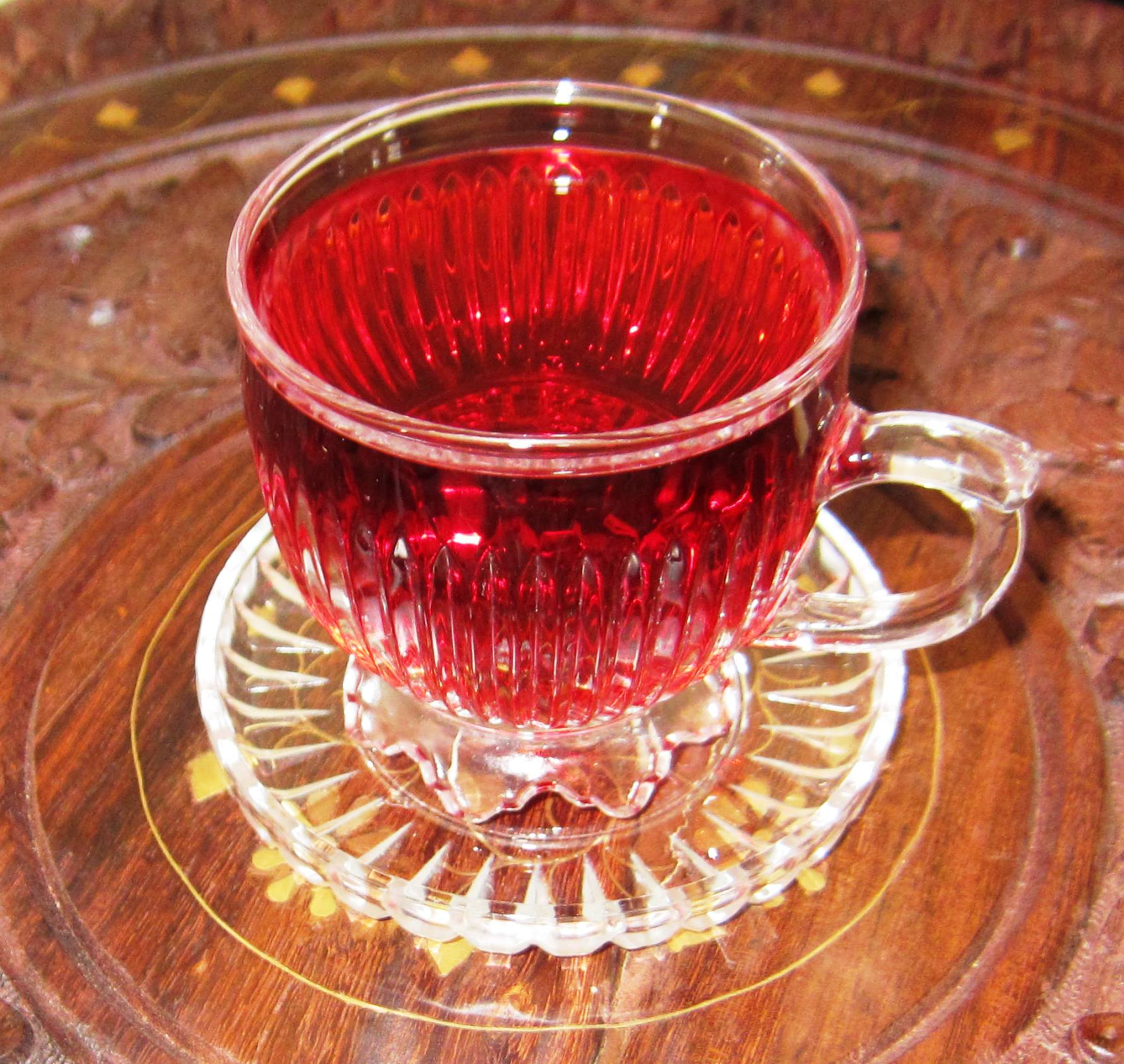
Hibiscus Tea, Zobo, Bissap, Roselle, Agua de flor de Jamaica, and Red Sorrel

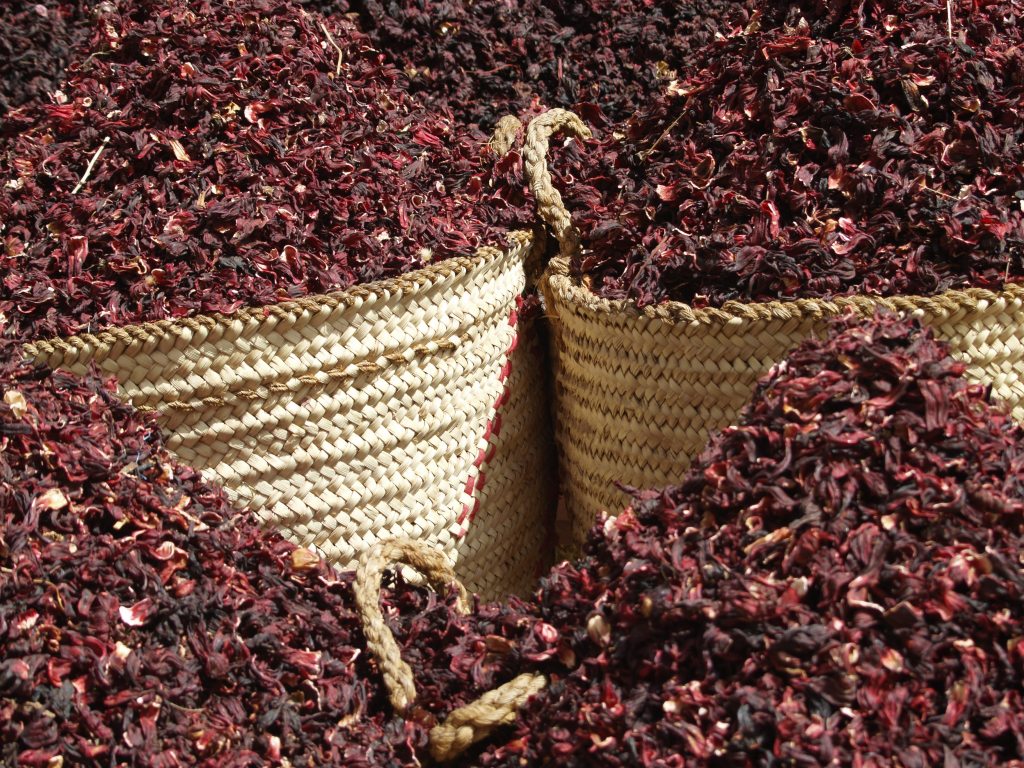
hibiscus leaves

a tea enjoyed around the world by various names as a healthy alternative to summer time citrus drinks.

Hibiscus tea is a herbal tea made as an infusion from crimson or deep magenta-colored calyces (sepals) of the roselle (Hibiscus sabdariffa) flower. It is consumed both hot and cold. It has a tart, cranberry-like flavor.

The drink is sometimes called roselle (a name for the flower) or rosella (Australia); sorrel in Jamaica, Belize, Barbados, Guyana, Dominica, and Trinidad and Tobago; red sorrel in the wider Caribbean; and agua/rosa de Jamaica or simply Jamaica in the United States, Mexico, and Central America. It is also known as zobo or bissap in west African countries like Nigeria.

Agua de flor de Jamaica, also called agua de Jamaica and rosa de Jamaica, is popular in Mexico, Central America, and parts of South America and the Caribbean. It is one of several common aguas frescas, which are inexpensive beverages typically made from fresh juices or extracts.

It is usually prepared by steeping the calyces, along with ginger (in Jamaica), in boiling water, straining the mixture, pressing the calyces (to squeeze all the juice out), adding sugar, sometimes clove, cinnamon and a little rum (in Jamaica), and stirring. It is served chilled, and in Jamaica this drink is a tradition at Christmas, served with fruit cake or potato pudding.

In Panama, both the flowers and the drink are called saril (a derivative of the English word sorrel). It is prepared by picking and boiling the calyces with chopped ginger, sugar, clove, cinnamon, and nutmeg. It is traditional to drink around Christmas and Chinese Lunar New Year, diverging from Mexico and Central America and much more in line with the Caribbean, due to the strong West Indian influence in Panamanian culture especially in Panama City and most of Panama’s Caribbean coast.

In the English-speaking Caribbean, the drink, called sorrel, is made from the calyces, and it is considered an integral part of Christmas celebrations. The Caribbean Development Company, a Trinidad and Tobago brewery, produces a Sorrel Shandy in which the tea is combined with beer.

In American soul-food culture, hibiscus tea is included in a category of “red drinks” associated with West Africa, and is commonly served in soul-food restaurants and at African-American social events.

Africa –Karkadé is served hot or chilled with ice. It is consumed in some parts of North Africa, especially in Egypt and Sudan at wedding celebrations. On a typical street in central Cairo, many vendors and open-air cafés sell the drink.

In Africa, especially the Sahel, hibiscus tea is commonly sold on the street and the dried flowers can be found in every market. Variations on the drink are popular in West Africa and parts of Central Africa. In Senegal, bissap is known as the “national drink of Senegal”. Hibiscus tea is often flavored with mint or ginger in West Africa. In Ghana it is known as “sobolo”.

Asia –In Thailand, most commonly, roselle is prepared as a cold beverage, heavily sweetened and poured over ice ..Plastic bags filled with ice and sweetened ‘grajeab’ can be found outside of most schools and in local markets. It is less commonly made into a wine, sometimes combined with Chinese tea leaves, in the ratio of 4:1 by weight (1/5 Chinese tea). The beverage is consumed in Malaysia and Indonesia as well.

Europe- In Italy, hibiscus tea, known as carcadè or Italian tea, is usually drunk hot, often with the addition of sugar and lemon juice. First introduced from Eritrea, it was widely used as a tea substitute when the country was hit by trade sanctions for its invasion of Abyssinia. In other European countries, it is often an ingredient in mixed herbal teas, (especially with malva flowers or rose hips in the mix, to enhance colouring …

Personal note:

Summertime on the East Coast of the USA, in Connecticut, New York and Vermont, is often very hot. For a cool alternative to lemon-aid drinks, while touring the eastern seaboard, I often carried dried hibiscus leaves with me and made this drink at room temp, as a hot tea or a cold beverage. I also discovered the tea in herb shelves in Mexican mercados while traveling through Central Mexico and the Mexican Riviera.

To sweeten the drink, I stewed chopped nectarine and Santa Rosa plums into the brew. These fruit’s flowery flavors blend well with the hibiscus leaves. The amount of sweetness is of course a matter of personal choice. With enough fruit added to the sweetened leaves the mixture becomes a light syrup that can be used on pancakes, waffles, muffins and/or biscuits. You can experiment with hibiscus pops and non-alcoholic Sangrias

Always good to keep some dried leaves on hand in your pantry all year round.

References and recipes

https://en.wikipedia.org/wiki/Hibiscus_tea https://www.youtube.com/watch?v=FKQSlO33WZY

https://www.healthline.com/nutrition/hibiscus-tea-benefits#section9 https://www.livealittlelonger.com/health-benefits-of-hibiscus/

https://commons.wikimedia.org/wiki/Category:Hibiscus_tea#/media/File:Chai_torsh_-_Hibiscus_tea.png

Health Benefits

Antioxidant-helps cleanse body of toxins and help body fight against development of some cancers and high cholesterol

May help lower blood pressure and body fat May boost liver function and aid digestion

Anti-inflammatory properties may boost immune system Can be used as a remedy for pre-mensural syndrome

A rehydrating, energy boost drink Rich in Vitamin C, helps relieve cold symptoms

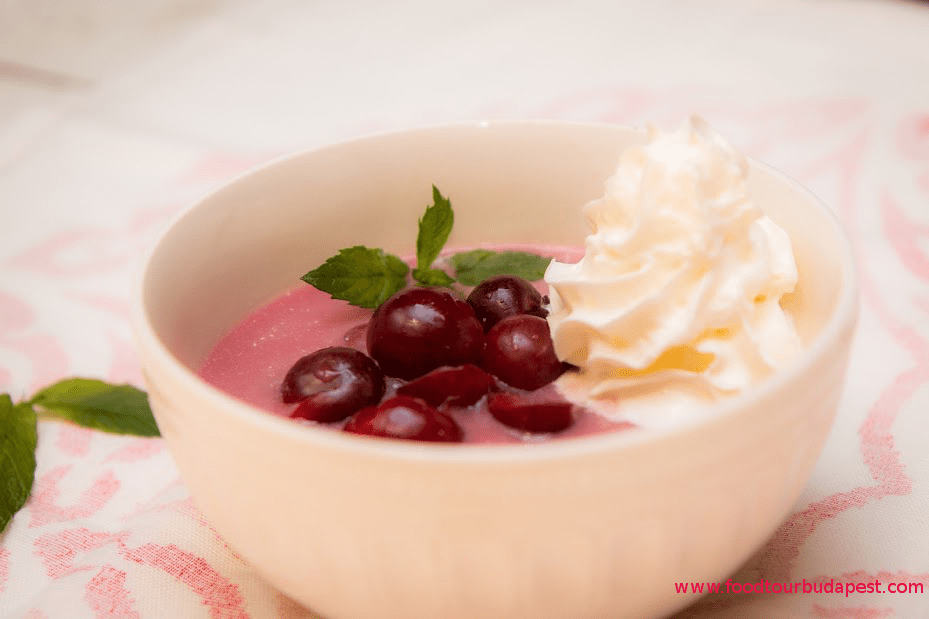
Hungarian Hideg Meggyleve-Sour Cherry Soup

is a slightly sweet soup made with sour cream, sugar and whole fresh sour cherries, served chilled [with a dollop of sweet cream]. Sometimes cloves and cinnamon are added. The dish originates from Hungary, and is a summer delicacy throughout Europe, particularly Austria, Poland, Slovakia, and Germany . . .

In Hungarian cuisine, meggyleve soup is made from the fruits of a sour cherry tree (Prunus cerasus), and not from sweet cherries. The name is formed from meggy meaning ‘sour-cherries’, and leves meaning ‘soup’. The dish is traditionally served as a dinner course, usually as either the appetizer, soup or dessert dish, on warm summer nights or for hot summer luncheons. In preparation, whole sour cherries are cooked and their pits are included.

Sour cherry trees are numerous in Hungary, and Meggyleve is considered a good example of the quintessentially Hungarian fusion of Eastern/Asian influences with traditional Continental European cuisine.

According to Adeena Sussman’s article at “My Jewish learning”(see link below), “the tradition of eating dairy products on Shavuot has ushered in an entire menu of delicious dishes for Hungarian Jews.”

Shavuot, Origin: Hebrew, the holiday celebrating the giving of the Torah at Mount Sinai, falls in the Hebrew month Sivan, which usually coincides with May or June.

[The holiday] often coincided with [Hungary’s] prolific sour cherry harvest. Ask someone with Hungarian ancestry about their favorite foods, and invariably sour cherry soup is among them. “We would eat it during the summer months,” said Miri Abraham, a friend of mine who used to visit her Hungarian grandmother, Emma, in Israel during summer vacations. “It was always part of a dairy meal.”

“A bit about sour cherries vs. cherries in general (from Melanie’s Kitchen (see link below): Sour cherries should not be confused with their cousins, the reddish-black Bing cherry and the peachy-blush Rainier cherry. These two sweet cherries (which are larger and firmer than sour cherries) are great for eating “as is” like any other fresh fruit, but they do not make for great baked desserts. When sour cherries are cooked, they become quite sweet, plus, they hold their shape better than their sweet relatives. Sour cherries are a bit too tart to eat more than just a few out-of-hand, but they make superb preserves, pies and cobblers.”

A Personal Note– Years ago, while studying law at Charles Univeristy in Prague, a friend insisted that a group of us take a train ride from The Czech Republic to the Hungarian capital- Budapest, during a summer holiday, largely to sample this soup. This friend had visited Budapest years before with her family and tasted the soup at a well know resurtant. She insisted that our summer experience in Central Europe would not be complete without trying Hideg Meggyleve at least once.

So, one hot July, the very next day after arriving in Budapest, a group of us went Meggyleve-tasting and were all pleasantly surprised. None of us disliked the experience. After a rich meal of Meggyleve and Goulash, with Hungarian breads and wines, we went sightseeing and ended the day with a trip to Margaret Island, (Margitsziget) and attended an outdoor performance of the ballet-Giselle- https://en.wikipedia.org/wiki/Giselle The end of a perfect summer day.

Recipes and references

https://www.myjewishlearning.com/recipe/sour-cherry-soup/ https://en.wikipedia.org/wiki/Sour_cherry_soup https://www.bitchinfrommelanieskitchen.com/2015/07/-hungarian-sour-cherry-soup-hideg-meggyleves-.html https://www.bing.com/search?q=Maragrit+island+Budapest++hungary&qs=n&form=QBRE&sp=-1&pq=maragrit+island+budapest+hungary&sc=0-32&sk=&cvid=2921C595E5D14022A216DCD6C8DCCDA5 https://dailynewshungary.com/recipe-of-the-week-sour-cherry-soup/ https://en.wikipedia.org/wiki/Giselle

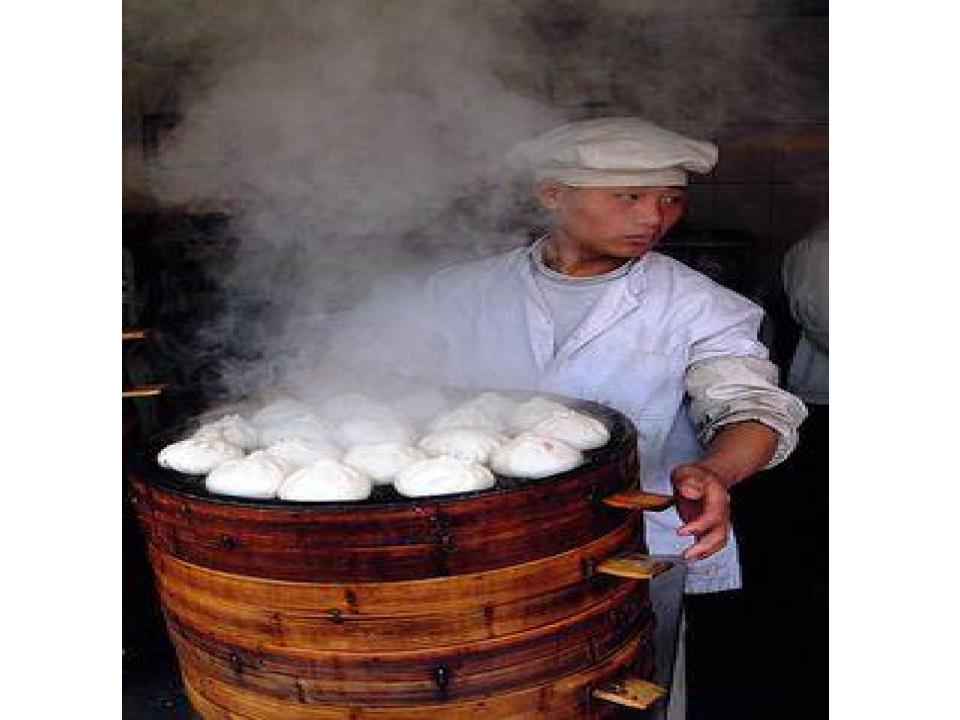
Mantou, Chinese Steamed Buns, Mian Bao 馒头, 面头

” is a type of cloud-like shaped steamed bread or bun popular in Northern China. Folk etymology connects the name mantou to a tale about Zhuge Liang. (celebrated adviser to Liu Bei, founder of the Shu-Han dynasty). “

Zhuge Liang

Description

“Mantou are soft and fluffy steamed bread mounds, typically eaten as a staple food in northern parts of China where wheat, rather than rice, is grown. They are made with wheat flour, water and a leavening agent-often yeast. Traditionally, mantou is a staple carbohydrate of the northern Chinese diet, analogous to rice, which forms the mainstay of the southern Chinese diet. They are also known in the south of China, but are often served as street food or a restaurant dish, rather than as a staple.”

“Restaurant mantou are often smaller and more delicate and can be deep fried as a dessert and dipped in sweetened condensed milk. A similar food, but with a savory or sweet filling, is baozi. Mantou is the older word, and in some regions (such as the Jiangnan region of China, and Korea) mantou can be used to indicate both the filled and unfilled buns, while in Japan the equivalent local reading of the word (manjū) refers only to filled buns. “

 Etymology and history

“Mantou may have originated in the Qin State of the Zhou Dynasty during the reign of King Zhaoxiang (307 BCE – 250 BCE). It as well as other wheat derived foodstuffs such as noodles, Shaobing and Baozi became popular during the Han Dynasty (206 BCE – 206 CE) and collectively were known as 餅; bǐng; mantou was distinguished as 蒸餅; zhēngbǐng or 籠餅; lóngbǐng during the Western Jin Dynasty (265–316 CE).

Shu Xi (束皙) wrote about steamed cakes (蒸餅; zhēngbǐng) in his “Ode to boiled cakes” (湯餅賦; tāngbǐngfù), written around 300 CE. He first called them mantou (曼頭; màntóu). In this book, it was advised to eat mantou in a banquet during the approaching spring.

The Mongols are thought to have taken the filled (baozi) to many countries of Central and East Asia about the beginning of the Yuan Dynasty in the 13th century. The name mantou is cognate to manty and mantı; filled dumplings in Turkish, Persian, Uzbek, and Pakistani (“mantu”)cuisines. In Japan, manjū (饅頭) filled buns, traditionally contain bean paste or minced meat-vegetable mixtures called (nikuman 肉まん “meat manjū”).

Filled mantou are called siyopaw in the Philippines, derived from Chinese shāobāo (燒包). In Thailand, filled mantou is called “salapao” (ซาลาเปา). In Korea, mandu (만두; 饅頭) can refer to both baozi or jiaozi (餃子), and in Mongolian cuisine, manty or mantu are steamed dumplings, which are said to have led to the Korean mandu. In Singapore, the dish chilli crab is commonly served with fried mantou.”

Folklore

“In popular Chinese legend the name mantou literally means “barbarian’s head”. The legend is set in the Three Kingdoms period (220–280 CE) when Zhuge Liang, the Chancellor of the state of Shu Han, led the Shu army on a campaign against Nanman forces in the southern lands of Shu, which correspond to roughly present-day Yunnan, China, and northern Myanmar.

After subduing the Nanman king Meng Huo, Zhuge Liang led the army back to Shu, but met a swift-flowing river which defied all attempts to cross it. A barbarian lord informed him that in olden days, the barbarians would sacrifice 50 men and throw their heads into the river to appease the river deity and allow them to cross.

As Zhuge Liang did not want to cause any more of his men to die, he ordered his men to slaughter livestock and fill their meat into buns shaped roughly like human heads (round with a flat base). The buns were then thrown into the river. After a successful crossing, he named the bun “barbarian’s head” (mántóu, 蠻頭, which evolved into the modern 饅頭).

Another version of the story relates back to Zhuge Liang’s southern campaign when he instructed that his soldiers who had fallen sick from diarrhea and other illnesses in the swampy region be fed with steamed buns with meat or sweet fillings.

References

https://en.wikipedia.org/wiki/Mantou

Personal Note: During a recent trip to China, while living in a resort town in Zhejiang Province, on the second floor of my apartment was market. Several stalls had bakers and cooks preparing take out food. One of my favorite quick morning breakfast dishes was mian bao with red pepper chutney and green tea matcha. Try these warmed and fresh from the streamer.

Recipe:

https://www.mydiversekitchen.com/recipe/we-knead-to-bake-29-tingmos-recipe

My Diverse kitchen-We Knead To Bake #29 : Tingmos/ Ting Momos – Tibetan Steamed Buns With Tomato Based Sepen Hot Sauce/ Chutney

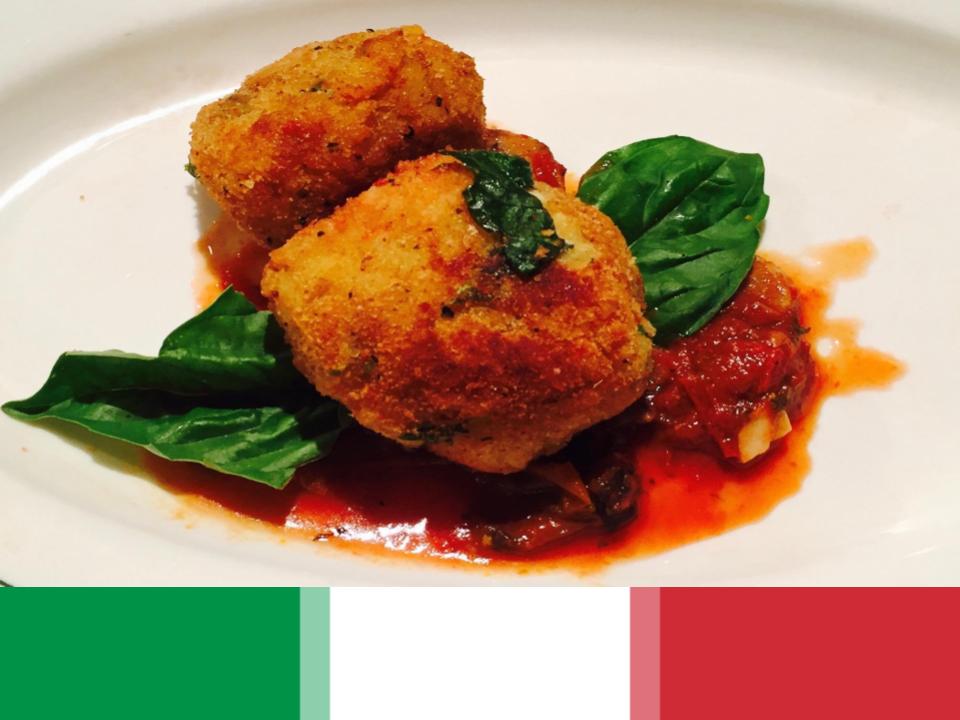
Italian/Scillian Arancini, little orange- piccola arancia

Arancini (UK: /ˌærənˈtʃiːni/, US: /ˌɑːr-/, Italian: [aranˈtʃiːni], Sicilian: [aɾanˈtʃiːnɪ, -ˈdʒiː-])[a] are stuffed rice balls which are coated with bread crumbs and then deep fried. The most common fillings are: al ragù or al sugo, filled with ragù (meat or mince, low temperature and long time cooked with tomato sauce and spices), mozzarella and/or caciocavallo cheese, and often peas, and al burro or ô bburru, filled with ham and mozzarella or besciamella.A number of regional variants exist which differ in fillings and shape. The name, which is translated as “little orange”, derives from their shape and colour which, after cooking, is reminiscent of an orange. Arancini al ragù produced in eastern Sicily have a conical shape representing the volcano Etna. . . “

History

“Arancini are said to have originated in 10th-century Sicily at a time when the island was under Arab rule.

In the cities of Palermo, Siracusa, and Trapani in Sicily, arancini are a traditional food for the feast of Santa Lucia on 13 December when bread and pasta are not eaten. This commemorates the arrival of a grain supply ship on Santa Lucia’s day in 1646, relieving a severe famine.

Today, with the increasing popularity of this finger food in modern Italian food culture, arancini are found all year round at most Sicilian food outlets, particularly in Palermo, Messina and Catania. The dish was traditionally created to provide a full meal to Federico II di Svevia during his hunting activities.”

Ingredients and variations

“The most common type of arancini sold in Sicilian cafés are arancini al ragù, which typically consist of meat in a tomato sauce, rice, and mozzarella or other cheese. Many cafés also offer arancini al burro (with butter or béchamel sauce) or specialty arancini, such as arancini con funghi (mushrooms), con pistacchi (pistachios), or con melanzane (aubergine).

In Roman cuisine, supplì are similar but are commonly filled with cheese (different preparation methods and filling distribution). 

In Naples, rice balls are called pall’e riso

In a variant recipe originating among the Italian diaspora in Southeast Texas, the arancini are stuffed with a chili-seasoned filling.”

In popular culture

“In Italian literature, Inspector Montalbano, the main character of Andrea Camilleri‘s detective novels, is a well-known lover of arancini. . . “

Reference and recipes

https://en.wikipedia.org/wiki/Arancini

https://lacasa.com.au/recipes/sabinas-arancini-balls/
La Casa Del Formaggio- Sabina’s Arancini Balls

http://thepassionateolive.com/recipe-items/arancini-sicilian-rice-balls-with-marinara-sauce/
The Passionate Olive

vegan kimbap recipe

Deborrah of BlacksGoingVegan.Com http://blacksgoingvegan.com/vegan-kimbap-recipe/

Blacks Going Vegan! Promoting Health Building Plant-Based Nutrition for African AmericansBlacks Going Vegan!

Recipe Type: Light Meals Cuisine: Vegan Number Servings: 5-6 rolls Prep Time: 45 mins Cook Time: 30 mins Total Time: 1 hour 15 mins

PREPARATION OF INGREDIENTS FOR VEGAN KIMBAP

1.Pour the dried mushrooms into a strainer and rinse them thoroughly for about 30 seconds. Place them into a large bowl. Combine 2 cloves minced garlic, 3 Tablespoons tamari, 2 Tablespoons brown sugar, and 1 Tablespoon sesame oil as your marinade. Stir well and pour over dried mushrooms. Cover and set aside for 30-45 minutes while you prepare remaining ingredients.

2.Put rinsed rice and 1 tsp sea salt in rice cooker, then add water. Use ½ cup or so up less water than you usually do (for 2 cups of rice I use 1-2/3 cups of water).

3.Peel and cut 1 very large or two medium carrots into 3″ long pieces. Cut those pieces into matchsticks. You want to have about 2 cups of carrots in total. Sprinkle lightly with salt and set aside.

4.Rinse and strain 10 oz package of baby spinach leaves, then set them aside.

5.Cut English cucumber in half, then peel one of the halves with a vegetable peeler. Cut into ½” thick slices. Cut those slices into strips about ½” wide. Place them on your assembly tray.

6.Measure out 1.5 Tablespoons of tamari or soy sauce, ¼ cup of water, and 2 Tablespoons Agave or rice syrup. Place into a small bowl and set aside. This is your burdock root seasoning mix.

7.Measure out 3 Tablespoons of rice vinegar, 4 teaspoons brown sugar, 2 Tablespoons of sesame oil, and 1 to 1.5 teaspoons of sea salt into a small bowl. Mix thoroughly and set aside. This is your rice seasoning mix.

8.Rinse, then trim ends off burdock root. Remove thin skin with edge of a spoon or back of a knife. Cut each piece diagonally into thin slices, then slice them into matchsticks. You will see them turning brown, but don’t worry about it, as you’ll be cooking them in soy sauce later anyway.

COOKING THE INGREDIENTS

Rice 1.Once the rice has finished cooking, immediately remove it from the rice cooker into a baking dish or large but shallow bowl. Pour the rice seasoning mix over the hot rice and gently fold and mix thoroughly. Let rice cool until no more steam is emitted. Sprinkle with sesame seeds, then cover with plate or plastic wrap or foil to maintain moisture.

Burdock Root 1.Heat a medium non-stick saute pan, heat 1 Tablespoon or so of sesame oil. Add the burdock root and stir fry 3-5 minutes until translucent. Reduce heat to medium-low then add seasoning mix (1.5 Tablespoons soy sauce, ¼ cup of water, 2 Tablespoons agave or rice syrup). Simmer until most of the liquid as evaporated (7-9 minutes). Remove from pan and place on assembly tray.

Carrots 1.Dump carrots onto a paper towel and cover with another. Pat and squeeze gently to remove excess moisture. Heat saute pan and add ½ teaspoon of avocado or sunflower oil. Sprinkle lightly with salt and stir fry the carrots for about 1 minute until tender crisp. Remove from pan and place on assembly tray next to burdock root.

Spinach 1.Bring 3 cups of water and 1 tsp salt to a boil. Dump in the entire package of baby spinach leaves. Let them cook a mere 30 seconds (blanch), then pour into strainer. Run cold tap water over the spinach to stop the cooking process immediately. Press excess water out gently with your hand, then remove to a bowl. Season spinach with 1 teaspoon sesame oil and a pinch or two of salt. Mix well and set aside.

Yellow Pickled Radish 1.Slice each piece of radish into ½” thick slices, then cut each slice lengthwise into long thin strips. Your strips should be ½” thick and ½” wide. Place these on the assembly tray with the other vegetables.

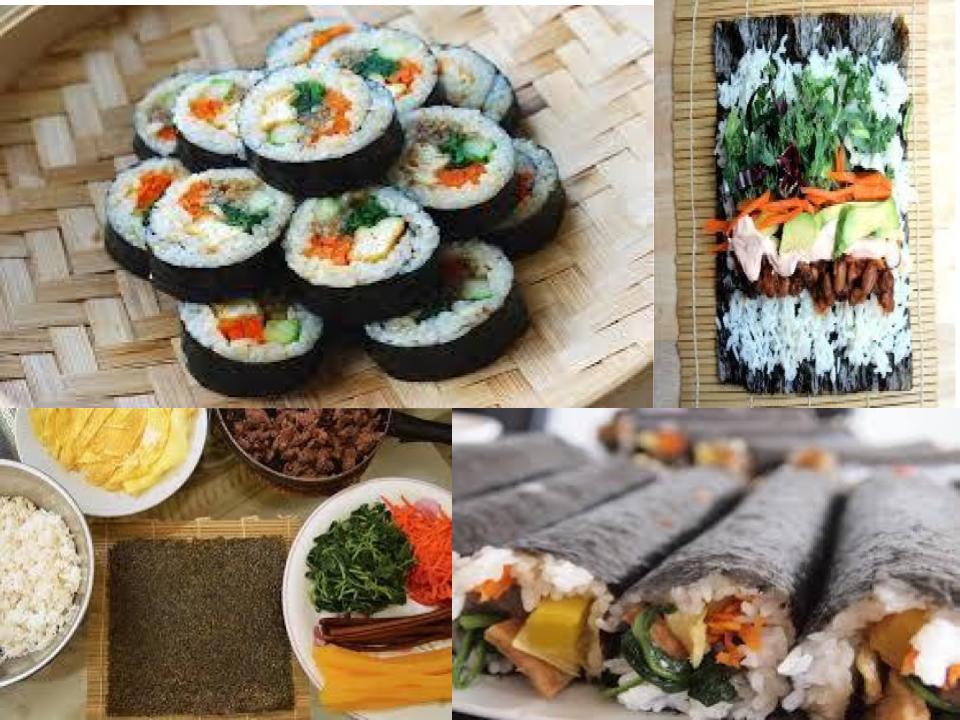
Wood Ear Mushrooms 1.Pour marinated mushrooms into mesh strainer and drain off excess. Into a large non-stick frying pan or wok, add 1 Tablespoon avocado oil. When hot, add the mushroom strips, 1 Tablespoon sesame oil, ½ cup sake (rice wine), 3 Tablespoons water, 1 teaspoon salt, and ½ teaspoon fresh ground black pepper. Stir fry for about 5 minutes over high heat until liquid evaporates and garlic is tender. Remove from heat onto plate. ROLL THE KIMBAP 1.Lay your bamboo mat on a flat surface. Place one sheet of seaweed on it dull side up. Spread about ⅔ cup of rice (more if you like a lot of rice) on top, leave the last 2-1/2″ bare, but put a few small dollops on the very end of the gim to help seal the roll securely.

2.Place a narrow strip of each of your fillings side by side on the rice. Remember, this is not a burrito, so don’t overstuff it or you won’t be able to roll the kimbap well, and you risk having it fall apart.

3.Using both hands, fold the end closest to you towards the away end, rolling the mat. Lift it up the end of mat once the end of the seaweed touches the rice, and squeeze the roll gently though the mat.

4.Continue rolling, lifting the mat as you roll so it doesn’t get rolled into the kimbap. When you reach the end, gently squeeze the mat to firm the roll, then remove the mat. Place roll on a tray seam side down, and repeat process until you’ve used all your filling.

5.Rub a bit of sesame oil on your hand and gently smooth it into the finished rolls. Sprinkle with sesame seeds if desired.

6.Slice each roll with a sharp knife into ½” thick slices. Wiping your knife every few cuts with a wet paper or cloth towel makes the cutting easier and neater. “A bit of information about a common Kimbapp ingredient-food for thought creative use of black fungus strips (dried wood ear mushrooms) and a marinade.

What Are Wood Ear Mushrooms? If you’ve ever had hot and sour soup at a Chinese restaurant, you’ve had wood ear mushrooms (aka black fungus), before. Those thin dark strips mixed into the soup were rehydrated black fungus. The information on wood ear mushrooms below is from the website SpecialtyProduce.Com.

Description/Tastewood ear mushrooms used in vegan kimbap Dried Wood Ear mushrooms have the appearance of black trumpet mushrooms, the often large mushroom appearing thin and frail, curled tightly into itself exposing its snowy underside against its black cap. When reconstituted, its colors blend together, turning it into a large wavy silvery black mushroom paddle nearly seven times the size of its dried form.

The Wood Ear resembles the crunchy and gelatinous consistency of jelly fish or squid. It has a delicate forest aroma and it is virtually absent of flavor, utilized solely for its textural properties.le year-round.

Current Facts Wood Ear mushrooms, Auricularia Polytricha, have numerous aliases include tree ear, black fungus, Judas’ ear, jelly fungus, yung ngo, mu-er, ear fungus, kikurage, mokurage and aragekikurage. They received their given name because they look like ears growing out of trees. Nutritional Value Wood Ears are being studied for effects on blood, as they contain a compound that inhibits clotting. This mushroom may be beneficial in preventing heart attacks and strokes. In China, this mushroom is believed to enhance health and treat ailments when eaten regularly or brewed in a tea.”

Korean gimbab/kimbapp, 김밥

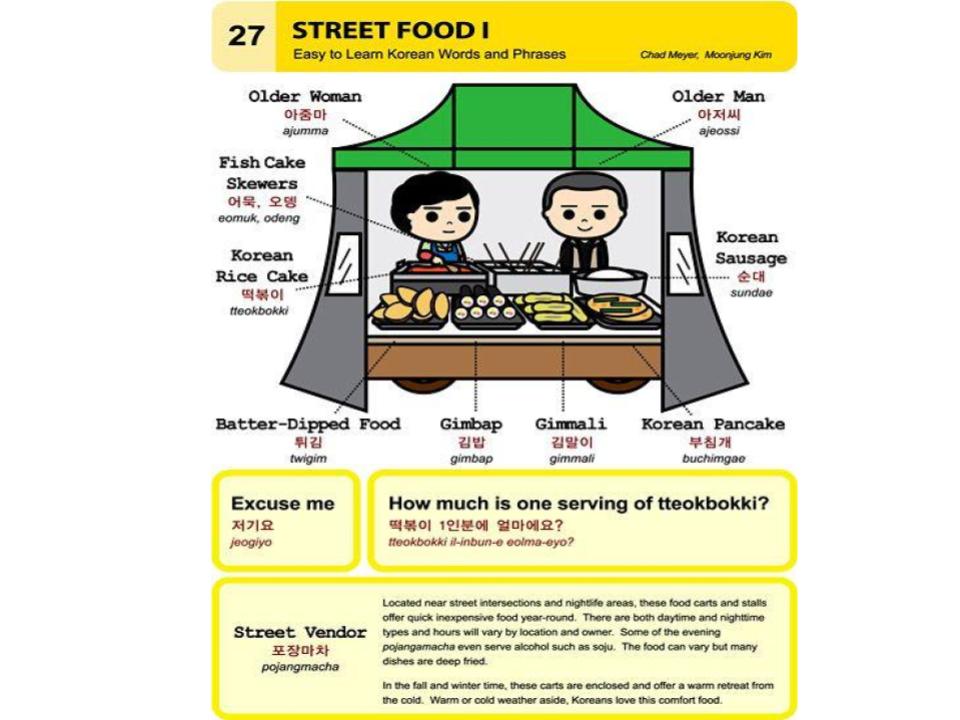
With Kpop idols all the rage these days, all things Korean as well as Korean cuisine is now considered hip. Kim- seaweed, and bapp- rice, or Kimbapp is a favored lunchtime street fare snack commonly called korean sushi. It’s generally larger than a sushi roll and filled or more likely stuffed with vegetables alone or with egg and/or meat /fish or cheese, wrapped in rice surrounded by a nori wrap or seaweed sheet. Like sushi, it is often made with a bamboo sushi wrapper and sliced into rounds. I like to eat it dripped in soy sauce with wasabi, but Koreans generally eat it freshly made and by itself. The trick seems to be to not bite the Kimbapp rounds, but place an entire one it your mouth all at once and enjoy the blending of favors.

“Kimbapp, “is often part of a packed meal, or dosirak, to be eaten at picnics and outdoor events, and can serve as a light lunch along with danmuji (yellow pickled radish) and kimchi.. .It is a popular take-out food in South Korea and abroad, and is known as a convenient food because of its portability. It is usually well wrapped (traditionally with aluminium-foil, but now sometimes in paper)”.

“Etymology- The term gimbap was used in a 1935 Korean newspaper article, but at the time, the loanword norimaki was used as well. Norimaki, which borrowed from the name of a similar Japanese dish, was part of the Japanese vocabulary that entered into the Korean language during the Japanese occupation (1910–1945), when teaching and speaking Korean were prohibited. The two words were used interchangeably until gimbap was made the universal term as part of efforts to clear away the remnants of Japanese colonialism and purify the Korean language.”

“History -Production of gim in Gyeongsang and Jeolla Provinces is reported in books from the 15th century, such as Gyeongsang-do Jiriji and Sinjeung Dongguk Yeoji Seungnam] Eating cooked rice rolled in gim is also a long-standing Korean custom. Yeoryang Sesigi, a Joseon book from 1819, describes a dish called bokssam (복쌈; transcribed using the hanja 縛占, pronounced bakjeom in Korean). There are two conflicting versions of the origin of the modern form of gimbap. Some sources say it was derived from norimaki, a Japanese sushi variant introduced to Korea during the Japanese occupation. Other sources say the food was developed from the local tradition of rolling bap (cooked rice) and banchan (side dishes) in gim. Gimbap and norimaki now refer to distinct dishes in Japan and Korea: the former called kimupapu (キムパプ) in Japanese and the latter called gimchobap (김초밥; “gim sushi”) or norimaki (노리마키) in Korean.

“Gimbap usually contains more ingredients and is seasoned with sesame oil, while norimaki is rolled with fewer ingredients and is seasoned with rice vinegar. “

“Variants Chungmu-gimbap •Chungmu-gimbap (충무김밥) – Originating from the seaside city of Chungmu (currently Tongyeong), the dish features thinner rolls with an unseasoned surface and only rice as the filler ingredient. It is served with spicy ojingeo-muchim (squid salad) and seokbakji (radish kimchi). •Mayak-gimbap (마약김밥) – A specialty of Gwangjang Market in Seoul. Mayak translates as “drug”, a reference to its allegedly addictive and concentrated flavour. Small kimbap filled with carrots, spinach, and danmuji(yellow pickled radish) is sprinkled with ground sesame seeds and dipped in its pairing sauce made from soy sauce and mustard. •Samgak-gimbap (삼각김밥) – Literally “triangle gimbap”. This variety is similar to Japanese onigiri, and is sold in convenience stores in South Korea. Fillings vary greatly. The expiration date is 1 day, and has a calorific value of between 140 and 200 kilo calories usually. •nude gimbap – Unlike ordinary gimbap, the ingredients of the gimbap go inwards, and the rice comes out and covers the entire area. It is similar to Japanese style rolls, but uses ingredients used in Korean-style kimbap (hams, meat fillets, pickled radish, spinach, etc.) and is also served with cheese or sauce.”

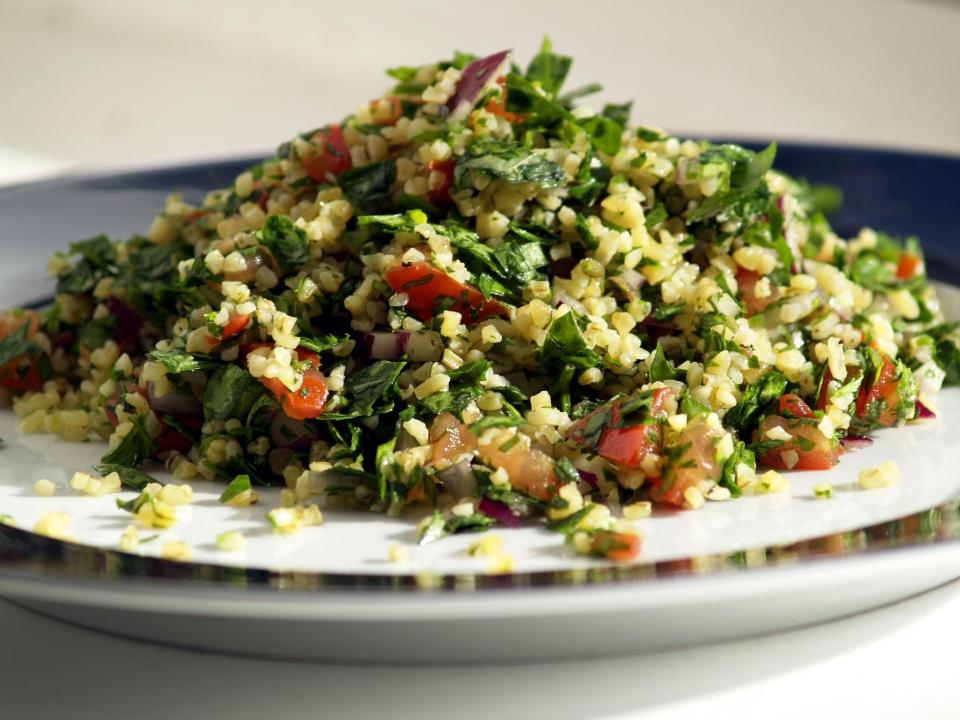
Tabbouleh- Recipe

Ingredients

  • “1 cup (240ml) bulgur wheat (medium grained)
  • 1/2 cup (120ml) olive oil
  • 1/2 cup (120ml) lemon juice
  • 1 Tbsp salt
  • Ground black pepper
  • 1 bunch parsley (Italian or curly)
  • 1/2 green bell pepper (optional)
  • 1/2 red bell pepper (optional)
  • Sliced ripe olives (optional)
  • dash of ground nutmeg (optional)
  • 2-3 ripe tomatoes (optionally peeled)”

Procedure

  1. “Cover the wheat in boiling water and let stand for five minutes, drain.
  2. Add lemon juice, oil, salt and pepper.
  3. Stir, refrigerate while the rest of the vegetables are being chopped.
  4. Core and finely chop the bell peppers.
  5. Remove the larger stems from the parsley and finely chop.
  6. Drop the tomatoes in boiling water for 20 seconds, then run under cold water and the skins peel off easily.
  7. Quarter the tomatoes and discard seeds.
  8. Chop finely.
  9. Mix all vegetables along with olives and nutmeg into the wheat.
  10. Refrigerate at least four hours.”

Alternate recipe

  • “1 cup (240ml) bulgur wheat
  • 2 cups (480ml) fresh parsley, chopped
  • 1 large tomato, diced
  • 1 cup (240ml) green onions, chopped
  • 1/3 cup (80ml) extra virgin olive oil
  • 1/2 cup (120ml) fresh lemon juice
  • Pinch of salt”

Procedure-Alt

  1. “Boil 2-3 cups of water
  2. once water comes to a boil, add bulgur wheat and remove from heat.
  3. Let cool.
  4. Finely chop the parsley.
  5. Dice the tomato, discarding seeds.
  6. Chop the onions.
  7. Drain the bulgur wheat
  8. Mix everything together.
  9. Refrigerate.”

Another alternate recipe

  • “1 cup (240ml) bulgur wheat (#2, medium size)
  • 1 cup (240ml) fresh parsley, chopped
  • 1/2 cup (120ml) fresh mint, chopped (do not use dried mint!)
  • 1 large tomato, peeled, seeded, and diced
  • 1 cup (240ml) green onions, chopped
  • 1 medium onion, grated
  • scant 1/2 cup (100ml) extra virgin olive oil
  • 1/2 cup (120ml) fresh lemon juice
  • pinch of salt
  • fresh ground black pepper”

Procedure-another alt

  1. “Soak bulgur in water for 15 minutes. Drain and squeeze out as much water as possible.
  2. Peel, seed, and dice the tomato. Chop the green onions, the white portion finely, the tops around medium. Grate the onion on the large side of a box grater. Finely chop the parsley and mint.
  3. Mix the bulgur, tomato, green onions, grated onion, parsley, and mint in a large bowl. Whisk the olive oil and lemon juice together and pour over the salad. Season to taste with salt and pepper.
  4. Refrigerate for an hour or so to allow the flavors to meld.”

https://en.wikibooks.org/wiki/Cookbook:Tabbouleh

Tabbouleh,تبولة

Tabbouleh (Arabic: تبولة‎ tabūla; also taboulehtabboulitabouli, or taboulah) is a Levantine vegetarian salad made mostly of finely chopped parsley, with tomatoesmintonionbulgur (soaked, not cooked), and seasoned with olive oillemon juicesalt and pepper. Some variations add garlic or lettuce, or use couscous instead of bulgur. . .”

Etymology

“The Levantine Arabic tabbūle is derived from the Arabic word tābil, meaning “seasoning” or more literally “dip”. Use of the word in English first appeared in the 1950s. . .”

History

“Edible herbs known as qaḍb formed an essential part of the Arab diet in the Middle Ages. . .Originally from the mountains between Syria and Lebanon, tabbouleh has become one of the most popular salads in the [region.] The wheat variety salamouni cultivated in SyriaBeqaa Valley and Baalbek was considered (in the mid-19th century) [] particularly well-suited for making bulgur, a basic ingredient of tabbouleh.”

Regional variations

“In the Middle East, particularly SyriaLebanonPalestineIsraelJordanEgypt, and Iraq, it is usually served as part of a meze. The Syrian and the Lebanese use more parsley than bulgur wheat in their dish.  A Turkish variation of the dish known as kısır, and a similar Armenian dish known as eetch use[s] far more bulgur than parsley. Another ancient variant is called terchots. In Cyprus, where the dish was introduced by the Syrians, it is known as tambouli. In the Dominican Republic, a local version introduced by Syrian and Lebanese immigrants is called Tipile. In Iran and South Asia it is usually eaten with rice, bread and kebabs.”

https://en.wikipedia.org/wiki/Tabbouleh

aran goirid Albannach, true scottish shortbread

Recipe by Ethan UK

True Scottish Shortbread Recipe by Ethan, UK 

READY IN: 1hr 5mins   SERVES: 28 YIELD: 28-30 Pieces 

INGREDIENTS  

7 ounces plain flour or 7 ounces all-purpose flour 

2 ounces sugar

4 ounces butter (or any vegan butter, ie. almond) 

1 pinch salt (small) 

DIRECTIONS

  1. Sift/sieve the flour into a bowl and add the pinch of salt. Put aside for the moment. . .
  2. Using butter, grease the baking tray well and put it aside for the moment. Yield for fingers (much preferred) is around a 7 to 8 inch square. For Petticoat Tails it will yield a chunky 8 inch circle.
  3. Pre-heat the oven (Gas Mark 3 (325F / 165C degrees)).
  4. Put the butter (if using unsalted butter then ADD a pinch of salt to it) into a medium-size mixing bowl and mash it with a fork until it is soft and creamy without lumps. But don’t let your hand heat warm it so much it starts to get runny. If you do, then put the bowl complete with butter & fork into the fridge for 5 – 10 minutes to cool it, then take it out and mash quickly again until smooth and creamy with no lumps.
  5. Add the sugar and mix it in well, and quickly.
  6. Add the salted flour a VERY little at a time – mixing it in with the fork to start with, but do this quickly.
  7. Knead well (on a very lightly floured surface). I was advised: knead for several minutes, and that the longer you knead, the better the shortbread will be. I usually aim for kneading for anything up to 10 minutes 
  8. Put it into the fridge for a couple of minutes to chill it slightly before resuming.
  9. Roll the mixture out to shape and size of the tray. For fingers, roll out to about 1/2 inch thick or perhaps even slightly thicker (this sounds awfully thick I know!, but it is important as if you go thinner it will affect the texture, and amazingly, the taste). For petticoat tails it needs to be a little under 1/2 inch thick to yield a chunky circle of about 7 to 8 inches.
  10. For fingers: prick all over with a fork and put it into baking tray. Do try to use one that can fit exactly, or one that at least three sides of the mixture fit snugly against, as any outer edges that don’t butt right up against the sides of a tray tend to get a bit over-baked.
  11. For petticoat tails: using fork prongs, from the outer edge towards the centre, indent the top about a 1/2 inch all the way round to give it a nice crinkly edge – sort of like the teeth on a cogwheel, then prick all the way round the middle ideally rotating the fork or the pastry (or yourself!) to give a pretty effect when cut. Carefully lift and support the decorated circle and place and fit snugly into the circular baking tray. Score lightly (to about halfway downwards to bottom of the tray) into eight equal segments.
  12. Bake until [] for about 45 minutes at Gas Mark 3 (325F / 165C degrees). When it’s starting get a bit dark around the edges it’s probably beginning to get a bit overdone already. Basically cook until it’s just starting to darken round the edges then get it out quick and cool it – I usually place the hot tray on a very cold surface until cool.
  13. Whilst still quite warm in the tray, mark across and cut into finger-shaped pieces (if not making petticoat tails) – but leave them there in the tray, cut and together until fully cold.

SERVING SUGGESTION:

Just on its own with a nice cup of tea or coffee, but also scrumptious on a plate with and/or dunked into a generous helping of creamy Cornish Dairy ice-cream and strawberries, jam (jelly) or fresh fruit.
https://www.food.com/recipe/true-scottish-shortbread-120644#activity-feed

Taameyya: The Original Egyptian Falafel by Noha Serageldin

Prep time 8 hours

Cook time 20 mins

Total time  8 hours 20 mins

the original falafel recipe hailing from Egypt, made with split fava beans and plenty of vibrantly green herbs  . .

Serves: 6-8

Ingredients

  • • 400g dried split & peeled fava (or broad) beans*
  • • 2 tsp. baking soda (sodium bicarbonate)
  • • 1 brown onion, OR 1 leek (white part only), OR 1 bunch of green (spring) onions, OR a combination of any of these, roughly chopped**
  • • 3-4 cloves garlic, peeled
  • • 1 bunch fresh parsley, leaves picked***
  • • 1 bunch fresh coriander, leaves picked***
  • • 1 tbsp. cornstarch
  • • 1.5 tsp. baking soda (sodium bicarbonate)
  • • 1 tsp. ground coriander
  • • ½ tsp. ground cumin
  • • 2 tsp. fine salt
  • • neutral oil, for frying (I use light refined olive oil. See notes)

Instructions

  1. SOAK THE BEANS:  . . .with the 2 tsp. baking soda, cover with plenty of water,  . . .soak for at least 4 hours, or up to overnight. Rinse very well, drain and set aside.
  2. MAKE THE FALAFEL MIXTURE: In the bowl of a food processor, combine  . . .. Process until everything is quite finely chopped and well mixed,  . .
  3. Add the well drained fava beans to the food processor and pulse . . .
  4. Transfer the mixture into a bowl, cover and chill in the fridge for 15-30 minutes,  . . . FORM THE FALAFEL: Wet your hands and scoop out about 2-3 tbsp. of the mixture at a time and form into falafels; you can go the traditional Egyptian shape of burger-like patties, or make them more round or oval if you prefer! Place them onto a tray lined with baking paper or foil as you form them. Sprinkle each patty with about ½ tsp. of sesame seeds and gently pat them on with your finger so that they stick.  . .. To cook, just take them out of the freezer and defrost only slightly, for 30-60min, before frying.
  5. FRY THE FALAFEL: Test the oil by dropping in a small bit of the falafel mixture; it is ready when the mixture bubbles up and starts to fry immediately. Once the oil is hot enough, you can begin to fry the falafel. Gently place 5-6 falafel at a time into the oil,  . . .. Fry for a couple of minutes, until very nicely browned, then flip them over and fry a further minute on the other side till browned all over. . .Serve immediately with warm pita bread, sliced tomatoes, cucumbers, pickles, and tahini sauce or hummus!

Reference

See also recipe for pumpkin scones and vegetable frittata
https://www.mattersofthebelly.com/taameyya-the-original-egyptian-falafel/

https://en.wikipedia.org/wiki/Falafel

FOOD FROM ABROAD

WORLD CUISINE

Longreads

Longreads : The best longform stories on the web

WordPress.com News

The latest news on WordPress.com and the WordPress community.

FOOD FROM ABROAD

WORLD CUISINE

Longreads

Longreads : The best longform stories on the web

WordPress.com News

The latest news on WordPress.com and the WordPress community.

Design a site like this with WordPress.com
Get started