
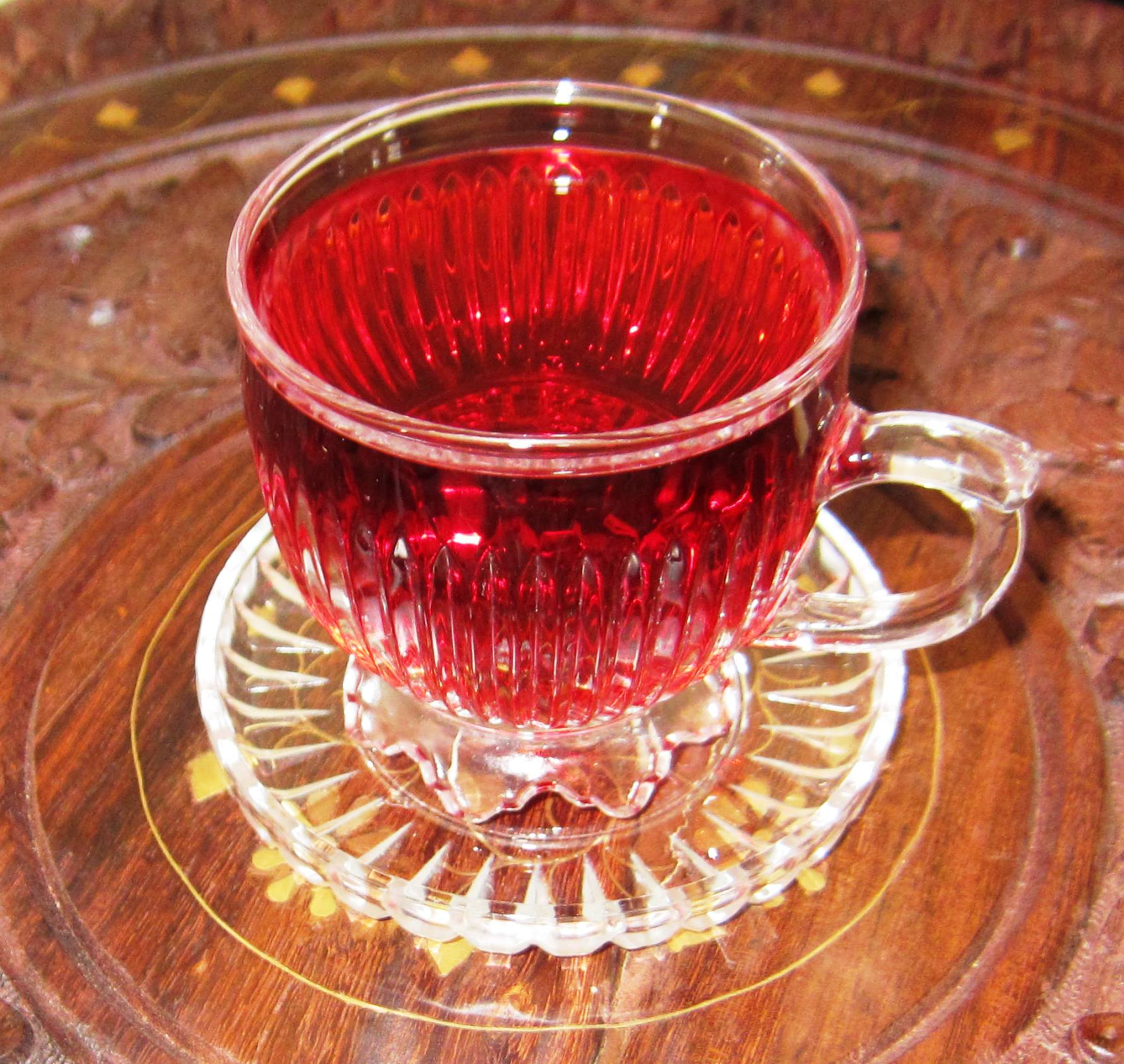
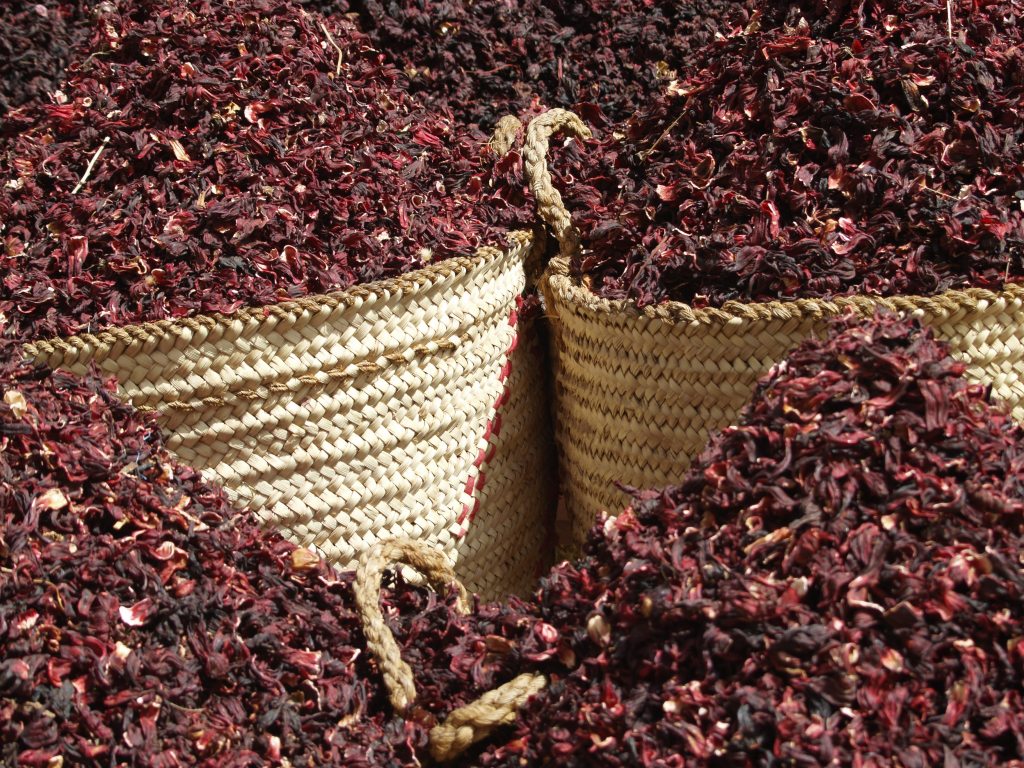
a tea enjoyed around the world by various names as a healthy alternative to summer time citrus drinks.
Hibiscus tea is a herbal tea made as an infusion from crimson or deep magenta-colored calyces (sepals) of the roselle (Hibiscus sabdariffa) flower. It is consumed both hot and cold. It has a tart, cranberry-like flavor.
The drink is sometimes called roselle (a name for the flower) or rosella (Australia); sorrel in Jamaica, Belize, Barbados, Guyana, Dominica, and Trinidad and Tobago; red sorrel in the wider Caribbean; and agua/rosa de Jamaica or simply Jamaica in the United States, Mexico, and Central America. It is also known as zobo or bissap in west African countries like Nigeria.
Agua de flor de Jamaica, also called agua de Jamaica and rosa de Jamaica, is popular in Mexico, Central America, and parts of South America and the Caribbean. It is one of several common aguas frescas, which are inexpensive beverages typically made from fresh juices or extracts.
It is usually prepared by steeping the calyces, along with ginger (in Jamaica), in boiling water, straining the mixture, pressing the calyces (to squeeze all the juice out), adding sugar, sometimes clove, cinnamon and a little rum (in Jamaica), and stirring. It is served chilled, and in Jamaica this drink is a tradition at Christmas, served with fruit cake or potato pudding.
In Panama, both the flowers and the drink are called saril (a derivative of the English word sorrel). It is prepared by picking and boiling the calyces with chopped ginger, sugar, clove, cinnamon, and nutmeg. It is traditional to drink around Christmas and Chinese Lunar New Year, diverging from Mexico and Central America and much more in line with the Caribbean, due to the strong West Indian influence in Panamanian culture especially in Panama City and most of Panama’s Caribbean coast.
In the English-speaking Caribbean, the drink, called sorrel, is made from the calyces, and it is considered an integral part of Christmas celebrations. The Caribbean Development Company, a Trinidad and Tobago brewery, produces a Sorrel Shandy in which the tea is combined with beer.
In American soul-food culture, hibiscus tea is included in a category of “red drinks” associated with West Africa, and is commonly served in soul-food restaurants and at African-American social events.
Africa –Karkadé is served hot or chilled with ice. It is consumed in some parts of North Africa, especially in Egypt and Sudan at wedding celebrations. On a typical street in central Cairo, many vendors and open-air cafés sell the drink.
In Africa, especially the Sahel, hibiscus tea is commonly sold on the street and the dried flowers can be found in every market. Variations on the drink are popular in West Africa and parts of Central Africa. In Senegal, bissap is known as the “national drink of Senegal”. Hibiscus tea is often flavored with mint or ginger in West Africa. In Ghana it is known as “sobolo”.
Asia –In Thailand, most commonly, roselle is prepared as a cold beverage, heavily sweetened and poured over ice ..Plastic bags filled with ice and sweetened ‘grajeab’ can be found outside of most schools and in local markets. It is less commonly made into a wine, sometimes combined with Chinese tea leaves, in the ratio of 4:1 by weight (1/5 Chinese tea). The beverage is consumed in Malaysia and Indonesia as well.
Europe- In Italy, hibiscus tea, known as carcadè or Italian tea, is usually drunk hot, often with the addition of sugar and lemon juice. First introduced from Eritrea, it was widely used as a tea substitute when the country was hit by trade sanctions for its invasion of Abyssinia. In other European countries, it is often an ingredient in mixed herbal teas, (especially with malva flowers or rose hips in the mix, to enhance colouring …
Personal note:
Summertime on the East Coast of the USA, in Connecticut, New York and Vermont, is often very hot. For a cool alternative to lemon-aid drinks, while touring the eastern seaboard, I often carried dried hibiscus leaves with me and made this drink at room temp, as a hot tea or a cold beverage. I also discovered the tea in herb shelves in Mexican mercados while traveling through Central Mexico and the Mexican Riviera.
To sweeten the drink, I stewed chopped nectarine and Santa Rosa plums into the brew. These fruit’s flowery flavors blend well with the hibiscus leaves. The amount of sweetness is of course a matter of personal choice. With enough fruit added to the sweetened leaves the mixture becomes a light syrup that can be used on pancakes, waffles, muffins and/or biscuits. You can experiment with hibiscus pops and non-alcoholic Sangrias
Always good to keep some dried leaves on hand in your pantry all year round.
References and recipes
https://en.wikipedia.org/wiki/Hibiscus_tea https://www.youtube.com/watch?v=FKQSlO33WZY
https://www.healthline.com/nutrition/hibiscus-tea-benefits#section9 https://www.livealittlelonger.com/health-benefits-of-hibiscus/
https://commons.wikimedia.org/wiki/Category:Hibiscus_tea#/media/File:Chai_torsh_-_Hibiscus_tea.png


Health Benefits
Antioxidant-helps cleanse body of toxins and help body fight against development of some cancers and high cholesterol
May help lower blood pressure and body fat May boost liver function and aid digestion
Anti-inflammatory properties may boost immune system Can be used as a remedy for pre-mensural syndrome
A rehydrating, energy boost drink Rich in Vitamin C, helps relieve cold symptoms
 FOOD FROM ABROAD
